For decades, luxury fashion and beauty brands have sold more than just products. A designer handbag, prestige lipstick or high-end skincare product can represent status, craftsmanship and the feeling of owning something that not everyone can afford. But as prices continue to rise across the fashion and beauty industries, consumers are increasingly questioning whether the name attached to a product is worth the price tag.
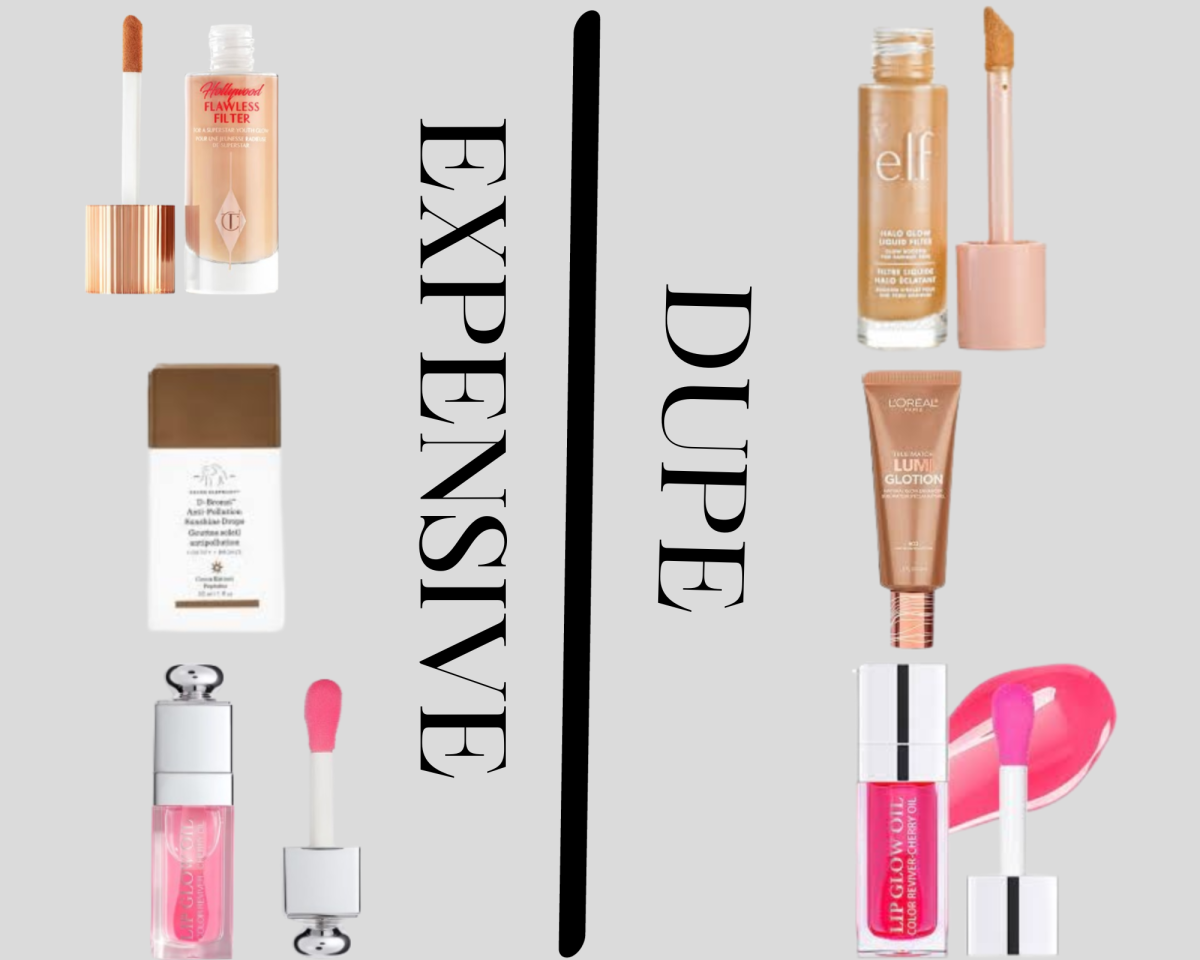
Expensive makeup products vs. affordable “dupe” versions - Photo Credit: Giselle Irizarry (CSC News)
Enter dupe culture.
Short for “duplicate,” the term “dupe” describes a lower-cost product that closely resembles a more expensive item in appearance, function or quality. Unlike traditional counterfeit products, which attempt to imitate a brand's identity or trademarks, dupes are generally marketed as alternatives rather than as the authentic product. Today, consumers are not necessarily embarrassed about purchasing them. In fact, they are proudly sharing their discoveries online.
From TikTok videos comparing $10 makeup products with $50 alternatives to Instagram creators showing affordable versions of designer clothing, fashion and beauty dupes have become part of mainstream shopping culture. The phenomenon reflects a broader shift in consumer priorities: instead of automatically associating higher prices with higher value, shoppers are increasingly asking “what are we actually paying for?”
Dupe culture is not happening in isolation. It’s developing alongside the growth of secondhand fashion, thrift culture, capsule wardrobes and other approaches to more intentional consumption.
Why Is Dupe Culture Growing?
One of the biggest forces behind dupe culture is simple, consumers are becoming more price-conscious.
The cost of participating in fashion and beauty trends can add up quickly. A consumer who wants to keep up with every viral skincare ingredient, makeup launch or seasonal fashion trend can easily spend hundreds of dollars. At the same time, younger consumers are particularly active on social media, where new products and trends appear constantly.
This creates a difficult equation. Consumers want access to the products they see online, but many cannot, or simply do not want to, pay luxury prices for every trend.
Dupe culture provides a solution.
Rather than abandoning a trend altogether, shoppers can search for a less expensive alternative. A $12 lip product may offer a similar color or formula to a $40 luxury product. A $30 handbag may resemble a designer style that costs several hundred dollars. The consumer gets the aesthetic or functionality they are looking for without the same financial commitment.
Research illustrates just how widespread this behavior has become. Northeastern University School of Law researcher Alexandra J. Roberts found that 71% of Gen Z and 67% of Millennials report that they sometimes or always purchase dupes. Roberts also notes that younger consumers have transformed dupes from something people might have purchased secretly into something they openly discuss and share with their friends and followers.
The shift is significant because it changes what value means to consumers. Instead of viewing a product's brand name as its primary source of value, shoppers can place greater importance on appearance, functionality, ingredients, quality and price.
TikTok Turned the Dupe Into a Trend
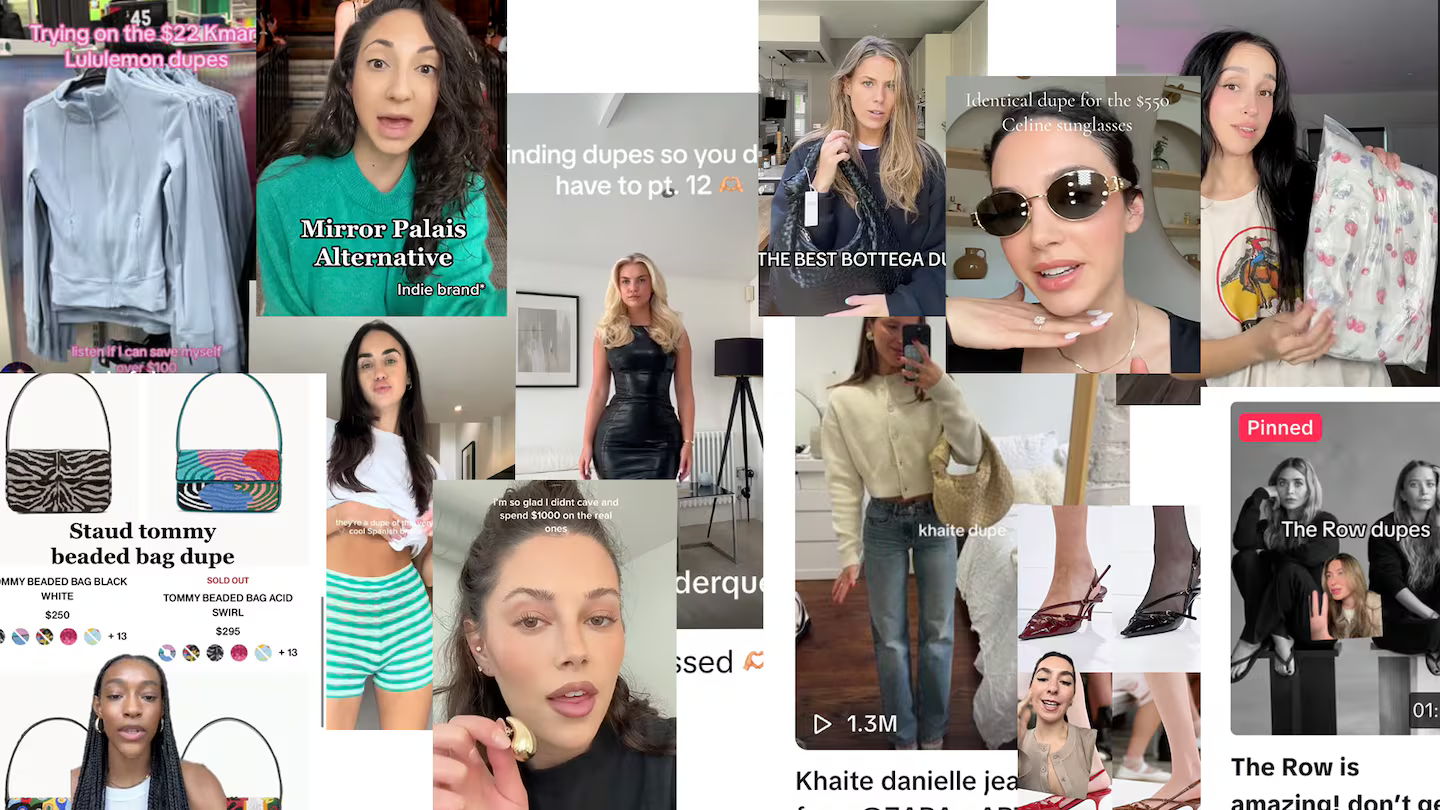
Collage of Tiktok “Dupe” Videos - Photo Credit: Joan Kennedy (The Business of Fashion)
While affordability may explain why consumers purchase dupes, social media helps explain why dupe culture has grown so quickly.
TikTok and Instagram have transformed shopping from a private activity into a social experience. Consumers can now watch someone test a product, compare it with an expensive alternative and immediately search for the cheaper version.
The hashtag #dupe has accumulated nearly 6 billion views on TikTok, demonstrating the enormous amount of attention surrounding the trend.
The appeal is partly entertainment. A creator might purchase two products, swatch them side by side and ask followers to guess which one costs more. Another might test a viral skincare product against a cheaper alternative. These videos turn price comparison into content.
But social media is also changing the traditional path to purchase.
According to eMarketer, roughly one-third of makeup consumers ages 18 to 34 (33%) and 25 to 34 (35%) reported purchasing a dupe because of something they saw on social media, based on Mintel research.
This demonstrates how powerful social media recommendations can be. A consumer does not necessarily have to walk into a store intending to purchase a dupe. They can encounter one while scrolling through TikTok or Instagram and immediately become interested.
In this environment, the creator becomes part reviewer, part product researcher and part salesperson.
The result is a shopping culture in which consumers actively search for the best value rather than simply the most prestigious product.
The Price of Luxury Is Being Questioned
The rise of dupes also raises a larger question for the fashion and beauty industries: How much are consumers actually willing to pay for a brand name?
Luxury and prestige brands have traditionally relied on exclusivity and brand equity to justify premium pricing. Consumers may be paying for superior materials, research and development, craftsmanship, packaging, customer service, heritage or the prestige associated with the brand.
However, social media makes product comparisons easier than ever.
A consumer can now see a $80 product sitting next to a $15 alternative within seconds. They can watch reviews, compare ingredients, read comments and search for opinions before making a purchase.
This transparency can make a large price difference more difficult to ignore.
That does not mean consumers have stopped buying luxury products. Instead, it suggests that shoppers are becoming more selective about where they spend their money.
Some may purchase a designer handbag while choosing a drugstore mascara. Others may buy an expensive coat but purchase affordable beauty products. The result is a more complicated consumer who does not fit neatly into the categories of either “luxury shopper” or “budget shopper.”
Are Dupes Always the Answer?
Although dupe culture emphasizes affordability, cheaper does not automatically mean better.
One criticism of constantly searching for inexpensive alternatives is that it can encourage consumers to purchase more products simply because they cost less. Saving $30 on one product does not necessarily save money if a consumer purchases five different alternatives they do not actually need.
There are also questions surrounding product quality, longevity and ethics.
In fashion, an inexpensive garment may look almost identical to a designer piece but use lower-quality materials or construction. If the garment needs to be replaced several times, the initial savings may disappear.
This has contributed to another consumer movement developing alongside dupe culture: buying fewer, better-quality products.
The Case for Quality and Longevity
While some consumers are searching for the cheapest alternative, others are moving in the opposite direction. Instead of buying more inexpensive products, they are investing in pieces designed to last.
This philosophy can be seen through the growing popularity of the capsule wardrobe.
A capsule wardrobe is a relatively small collection of versatile, high-quality clothing that can be mixed and matched across different occasions. Rather than constantly purchasing new pieces to follow every trend, consumers focus on timeless items that can remain in their wardrobes for years.
The capsule wardrobe represents a different interpretation of value.
Instead of asking, “How cheaply can I buy this?” the consumer asks, “How long will this last?”
This distinction is particularly important within fashion. A $30 shirt that is worn twice may ultimately provide less value than a $100 shirt worn dozens of times.
The same concept can apply to the beauty industry. Consumers may choose to purchase fewer skincare or makeup products and spend more on products they know they will consistently use.
Dupe culture and quality-focused shopping may appear contradictory, but both are responses to the same underlying question: Is this purchase worth my money?
The Rise of Resale Fashion
The search for value does not stop at affordable new products.
Consumers are increasingly turning toward secondhand fashion, giving rise to a broader thrift and resale culture.
Shopping secondhand allows consumers to access recognizable brands and higher-quality pieces without paying their original retail prices. Instead of purchasing a $300 jacket new, a shopper might find the same or a similar piece secondhand for significantly less.
This makes resale particularly relevant in an era when consumers are increasingly conscious of clothing prices.
The growth of secondhand fashion has been substantial. According to ThredUp's 2026 Resale Report, the global secondhand apparel market is projected to reach $393 billion by 2030, growing twice as fast as the overall apparel market. The report also estimates that the U.S. secondhand market could reach $78.8 billion by 2030.
ThredUp and GlobalData project that Gen Z and Millennials will account for 71% of global secondhand market growth through 2030.
This connects directly to the broader shift in younger consumers' shopping habits. Gen Z is not simply looking for new products at lower prices. They are exploring different ways of obtaining fashion altogether.
Thrift stores, vintage shops, online resale platforms and peer-to-peer marketplaces have transformed secondhand shopping from an occasional bargain hunt into a major component of modern fashion culture.
Thrift Culture Is Becoming Mainstream
There was a time when thrift shopping was primarily associated with finding inexpensive clothing. Today, it can also be associated with sustainability, individuality, nostalgia and fashion discovery.
Unlike traditional retail, secondhand shopping offers consumers access to products that may no longer be available in stores. Vintage pieces can provide a sense of individuality, while pre-owned designer clothing allows shoppers to participate in luxury fashion at a lower price.
Social media has accelerated this transformation. Thrift hauls, vintage styling videos, “come thrift with me” content and secondhand outfit inspiration have made the experience of finding pre-owned clothing part of online fashion culture.
ThredUp's 2026 report found that nearly half of shoppers now discover their next secondhand purchase through social media, creators and influencer feeds rather than traditional search.
This is an important development because it demonstrates that social media is influencing not only which new products consumers buy, but also how they discover used products.
The same platforms that introduce consumers to a $500 handbag can also introduce them to a $100 secondhand version.
The Sustainability Connection
The growth of secondhand fashion also intersects with concerns about the environmental impact of fast fashion.
Fast fashion has made it possible for consumers to purchase inexpensive clothing quickly and frequently. However, the constant cycle of buying and discarding clothing contributes to textile waste and increases the demand for new production.
Resale offers another option: keeping existing clothing in circulation for longer.
This does not mean that every secondhand purchase is automatically sustainable or that resale completely solves fashion's environmental challenges. However, extending the useful life of existing garments can reduce the need for consumers to purchase new items.
The growth of resale therefore represents more than a financial trend. It reflects a changing relationship with clothing itself.
Instead of viewing a garment as something that belongs to one person for one season, resale treats clothing as an item that can move between multiple owners.
What Dupe Culture Says About the Future of Fashion and Beauty
Dupe culture, capsule wardrobes and secondhand shopping may seem like separate trends, but together they reveal a larger transformation in consumer behavior.
Today's shoppers have more information than ever before. They can compare prices, ingredients, materials, reviews and alternatives before making a purchase. Social media has made those comparisons immediate and public.
At the same time, rising prices are forcing consumers to think more carefully about where their money goes.
For some, that means finding a $10 alternative to a $50 beauty product. For others, it means buying a secondhand designer item. And for another group, it means investing in a high-quality piece that they expect to own for years.
There is no single definition of value. What is changing is the assumption that more expensive automatically means better.
Brands are responding to this shift in different ways. eMarketer has highlighted companies such as e.l.f. Beauty and Target as examples of retailers benefiting from consumers' interest in affordable alternatives. Some established brands have also incorporated dupe culture into their marketing rather than ignoring it.
For luxury and premium brands, this creates both a challenge and an opportunity. If consumers can easily find a cheaper alternative, brands may need to communicate more clearly what makes their products worth the additional cost.
That could mean emphasizing craftsmanship, ingredients, innovation, durability, customer experience or brand heritage.
Meanwhile for consumers, the rise of dupe culture offers something that previous generations did not have to the same extent, which is unprecedented access to information.
The modern shopper can decide whether to buy the original, purchase a dupe, shop secondhand, invest in quality or simply skip the purchase altogether.
And perhaps that is the most important development of all.
The future of fashion and beauty may not belong to the cheapest product or the most expensive one. It may belong to the product that consumers believe gives them the greatest value.
Works Cited
Can We Go Thrift Shopping? thesantaclaraarchives.org (May 8). https://www.thesantaclaraarchives.org/blog/can-we-go-thrift-shopping
Counterfeit goes cool: high-end brands urged to embrace rise of #dupe, theguardian.com (2024, May 20). https://www.theguardian.com/media/article/2024/may/20/counterfeit-cool-high-end-brands-urged-embrace-dupe
Gen Z Fashion Market Size, Share & Industry Analysis, By Type fortunebusinessinsights.com (2026, August 31). https://www.fortunebusinessinsights.com/gen-z-fashion-market-115903
How Dupe Culture is Reshaping Retail, https://consultasg.com/, https://consultasg.com/how-dupe-culture-is-reshaping-retail/
Is Dupe Culture Out of Control? businessoffashion.com (2024, July 19). https://www.businessoffashion.com/articles/retail/is-dupe-culture-out-of-control/
A new generation is making thrift shopping cool (again) nbcnews.com (2026, June 9). https://www.nbcnews.com/business/consumer/thrift-shops-inflation-gen-z-rcna348991
ThredUp Resale Report 2026, https://cf-assets-tup.thredup.com/resale_report/2026/ThredUp_Resale_Report_2026.pdf
What’s all the talk about dupes? . cscnews.com (2023, December 13) https://cscsnews.com/2983/entertainment/whats-all-the-talk-about-dupes/