Walk into any Sephora, Ulta, or beauty retailer today and it can feel like every brand is competing to create the next “must-have” product. From viral skincare ingredients to innovative packaging and TikTok-famous launches, beauty companies are constantly looking for ways to make their products stand out in an increasingly crowded market. But what happens when three major beauty brands appear to launch nearly identical products at almost the exact same time?
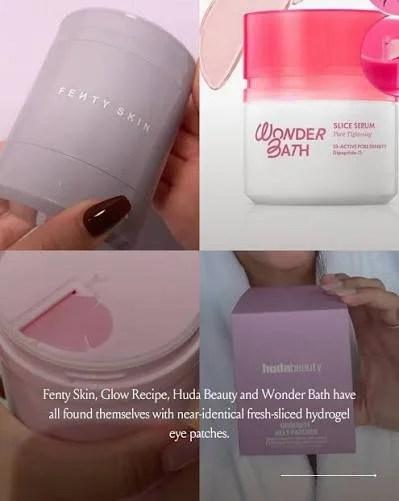
Fenty Skin, Wonder Bath, Glow Recipe, and Huda Beauty Eye Patch Dispensers (PrestigeHK).
That is exactly what happened in September 2026, when Fenty Skin, Glow Recipe, and Huda Beauty introduced remarkably similar eye patch products featuring a twist-and-slice packaging system. The products quickly became known online as “Eye-Patch Gate,” with consumers questioning how three major beauty brands could seemingly develop the same packaging innovation simultaneously.
At first glance, it seemed like Glow Recipe and Huda Beauty copied Fenty Skin. The reality sheds light on the reality of beauty product development, cosmetic manufacturing, packaging suppliers, and the role of marketing in the beauty industry.
The controversy demonstrates an often-overlooked part of the beauty business. The brands consumers see on the shelves are not necessarily responsible for every stage of creating the physical product. Beauty companies can work with outside laboratories, contract manufacturers, packaging companies, and suppliers to turn an idea into a finished product. As a result, different brands can sometimes end up using the same manufacturing resources, technologies, or packaging components.
The recent “Eye-Patch Gate” controversy exemplifies how in beauty, the product itself is only one part of the equation. When the formula, packaging technology, or manufacturing resources overlap, the branding, aesthetics, positioning, and marketing can become just as important in differentiating one product from another.
Behind the Beauty Industry
When consumers purchase a new serum, moisturizer, or eye patch, it is easy to imagine that the brand developed every aspect of the product internally. In reality, beauty product development can involve a complicated network of outside partners.
Many beauty companies work with contract manufacturers and suppliers that specialize in areas such as cosmetic formulation, research and development, filling, packaging, testing, and production. Some manufacturers offer the entire process, from developing a formula to filling and packaging the finished product.
This means that two beauty brands can potentially work with the same manufacturer or packaging supplier without producing identical products.
Think about it like building a house. Two homeowners can purchase materials from the same hardware store and hire the same construction company, but the finished houses can look completely different. Beauty works similarly, a brand can use an existing manufacturing resource while customizing the formula, ingredients, colors, fragrance, packaging design, claims, price point, and overall brand identity.
Beauty brands are constantly watching consumer behavior, social media conversations, influencer content, Google searches, and emerging product trends. When a particular ingredient, product category, or aesthetic begins gaining popularity, companies have an incentive to develop products quickly enough to capitalize on that interest.
The challenge is that product development can take considerably longer than a social media trend. By the time a beauty company identifies a trend, develops a formula, tests it, selects packaging, manufactures the product, creates its marketing campaign, and prepares for retail distribution, the trend may have already changed.
That creates an incentive for brands to rely on existing manufacturing capabilities and packaging technologies rather than developing every component from scratch.
Eye-Patch Gate
Over the past several years, under-eye patches have become a rising trend in the skincare industry. Products from brands such as Rhode, Topicals, and Dieux started a trend of branded under-eye treatments become a viral beauty trend on social media.
The appeal is understandable, eye patches are highly visual, relatively easy to demonstrate, and fit naturally into social media content. Whether someone is applying them while getting ready in the morning, traveling, doing their makeup, or filming a “self-care” routine, the product is designed for content.
However, many consumers complained about the small quantities of eye patches. Most brands only sell a pack of eye patches with 3-6 pairs inside.
For example, Rhode sells 6 pairs for $25, that adds up. Consumers wanted a larger quantity for a small price increase.
In September 2026, Fenty Skin introduced its Dew N Plump Fresh-Sliced Hydrogel Eye Patches, featuring a cylindrical container that allows consumers to twist the package and dispense a fresh hydrogel patch. Their new product design would provide consumers with a much larger quantity of eye-patches while maintaining the fresh, active ingredients within the formula. Within the following days, rumors began to spread that other beauty companies were developing the same product.
Glow Recipe soon showcased its Exopeptide Caffeine Brighten & Depuff Fresh Slices Eye Mask, followed by Huda Beauty's Undereye Jelly Patches, featuring an eerily similar dispensing concept. Almost immediately, consumers noticed the similarities.
The products appeared to use a similar twist-and-slice mechanism, creating the impression that multiple brands had arrived at virtually the same packaging innovation at the same time.
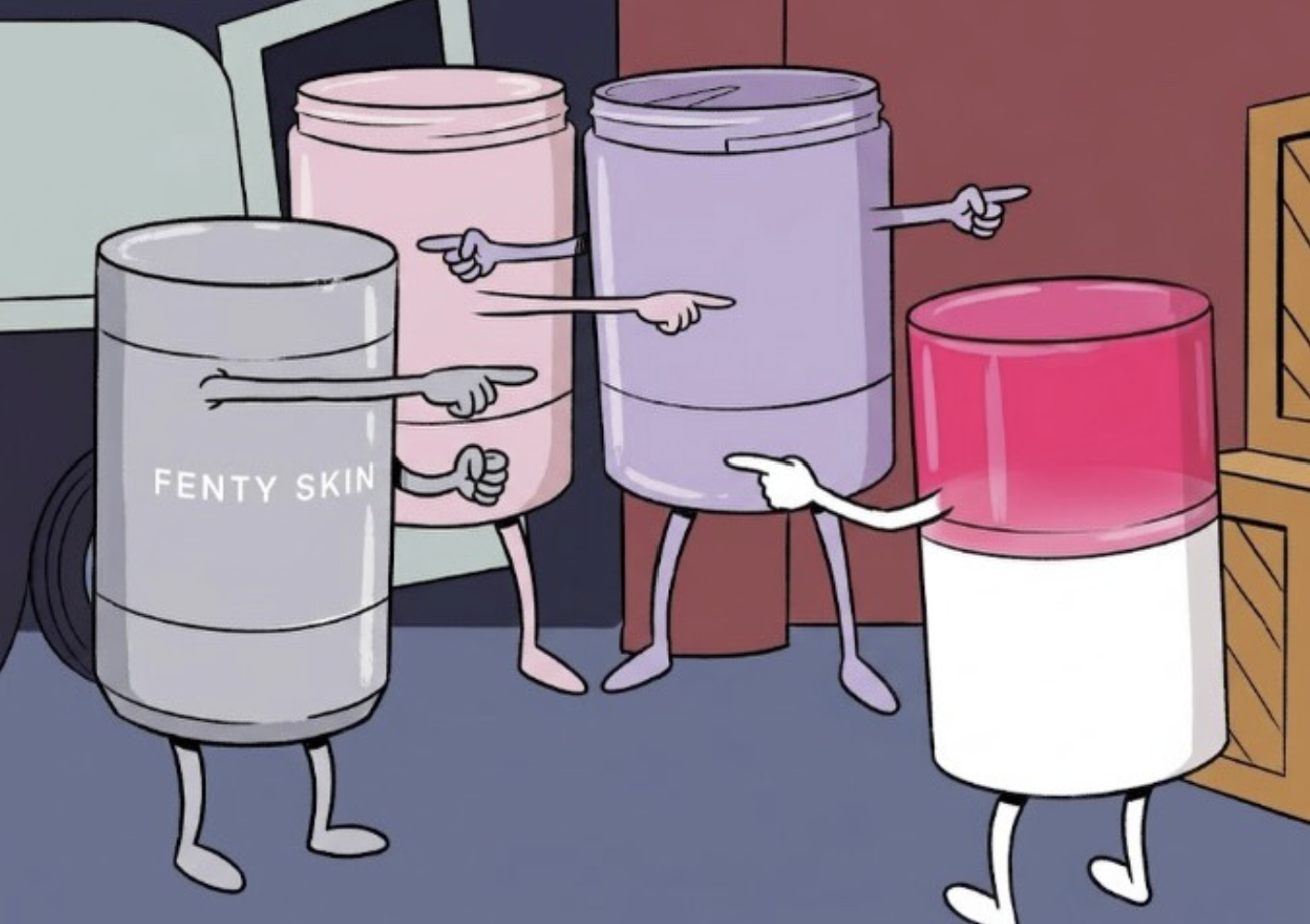
Graphic created by Fenty Skin as a response to eye-patch controversy, (Fenty Skin)
The internet did what the internet does best, it turned the coincidence into a conversation. Fenty Beauty even acknowledge the situation through social media humor, by creating a new graphic of an old internet meme. Instead of spiderman, the graphic showcased the four identical eye-patch dispensers. On the other hand, Huda Beauty joined the conversation by releasing an AI-generated video playing into the “documentary trend” which has been viral on social media for the past few months.
In addition, Huda Beauty founder, Huda Kattan, said in an interview, “I think it's pretty obvious that we all got screwed over by the same packaging supplier. Formulas are different, but we were lied to on the exclusivity with the packaging supplier. Pretty crazy,” (ELLE).
However, there is an important distinction between similar packaging and identical products.
The brands have maintained that their formulas are different. Glow Recipe, for example, described its product as having a formula focused on watermelon and caffeine. All three brands were selling similar products using the same product-delivery technology and packaging format.
The Supplier Behind the Similarity
The story becomes even more interesting when looking beyond the brands themselves.
According to reporting from The Business of Beauty, the packaging technology came from Samhwa, a South Korean packaging manufacturer. The company's “Fresh-Slice Hydrogel Eye Patch Dispenser” uses a twist mechanism to cut individual hydrogel patches from a larger product contained inside the package.
This technology was not created specifically for Fenty Beauty, Glow Recipe, or Huda Beauty.
In fact, Korean beauty brand Wonder Bath had already introduced a similar format earlier in 2026, demonstrating that the technology existed before the three major Western beauty brands entered the conversation.
When multiple beauty brands have access to the same product-development technology, their final products can look remarkably similar. The packaging itself can be sourced from a supplier. The brand can then develop or commission its own formula, establish its own claims, determine its price, design its visual identity, and create its marketing campaign.
Suddenly, three products can share the same “skeleton” while telling three completely different brand stories. That’s where marketing becomes especially important.
Packaging Is Similar = the Brand Has to Do More
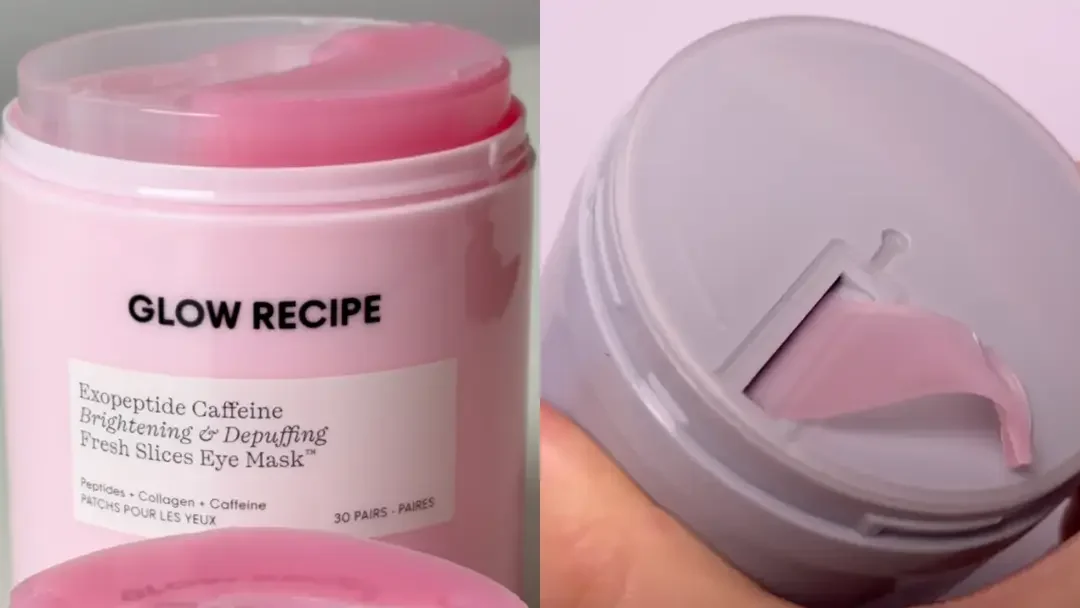
Glow Recipe Exopeptide Caffeine Brightening and Depuffing Fresh Slices Eye Mask and Fenty Skin’s Dew N Plump Fresh-Sliced Hydrogel Eye Patches. Collage made by
Beauty is an extremely visual industry. Consumers do not experience a skincare product only through its ingredients. They encounter it through its name, logo, packaging, color palette, advertising, influencers, social media presence, price, retail placement, and the larger identity of the brand.
Research into cosmetic packaging supports this idea. Studies have found that packaging can influence consumer perceptions and purchase behavior, with factors such as color, shape, materials, typography, and overall design contributing to how consumers perceive a product.
One study published in Psychology & Marketing found that packaging aesthetics can influence consumers' perceptions of product performance, particularly within the beauty category. However, the research also found that recognizable brand names and explicit product claims can change how consumers interpret packaging.
That is important when looking at Eye-Patch Gate. If Fenty Beauty, Glow Recipe, and Huda Beauty are using similar packaging technology, consumers need another reason to decide which product feels right for them.
This is where brand identity plays an important role. Fenty Beauty has built a reputation around inclusivity, Rihanna's cultural influence, and a bold, highly recognizable visual identity. Glow Recipe has established itself through colorful, fruit-inspired skincare and ingredient-focused storytelling. Huda Beauty brings the influence of Huda Kattan and a brand identity rooted in beauty expertise, social media, and community.
The packaging may be similar, but the consumer being targeted can be different. This is one of the fundamental principles of beauty marketing: the same basic product concept can be positioned in completely different ways.
Do Consumers Care About the Formula?
This is where the conversation gets complicated. For skincare enthusiasts and ingredient-conscious consumers, the formula can be one of the most important parts of a purchasing decision. Consumers may compare active ingredients, concentrations, clinical claims, texture, fragrance, skin concerns, and reviews before purchasing.
Not every consumer approaches beauty products this way. For many shoppers, factors such as brand familiarity, packaging, price, social media popularity, influencer recommendations, and product claims can play a significant role in deciding what to purchase. Packaging is particularly important because it is often the first thing a consumer sees.
A 2023 survey of more than 3,500 U.S. beauty consumers found that 46% of female beauty and personal-care buyers said packaging was influential or very influential in their purchase decisions, rising to 50% among millennial and Gen Z buyers. The survey also found that 30% of millennial and Gen Z beauty buyers enjoyed filming their unboxing experiences and posting them to social media.
That makes packaging more than a container, packaging can become content.
The sliced eye-patch packaging is a perfect example. Watching a product twist, cut, and dispense a fresh hydrogel patch is inherently satisfying and visually interesting. It gives consumers something to demonstrate on TikTok and Instagram before they even discuss the formula.
The Race Against Beauty Trends
The eye-patch controversy also highlights the increasingly fast pace of beauty product development. Beauty brands are constantly tracking TikTok trends, influencers, search behavior, consumer conversations, and emerging ingredients to predict what shoppers will want next.
But predicting trends comes with a major risk, timing. A product can take months or even years to move from an initial idea to a retail launch. During that time, consumers can move on to an entirely different trend. This creates a difficult balance for beauty companies.
Brands want to be innovative enough to introduce something consumers have never seen before. At the same time, they want to avoid spending years developing a product that becomes irrelevant before it reaches shelves. Using established suppliers and manufacturing technologies can potentially help brands move more efficiently. But it also creates the possibility that competitors are developing products using the same resources.
That results in what we saw in Eye-Patch Gate, three brands can independently pursue what they believe is an innovative idea and ultimately end up with products that look surprisingly similar.
Marketing Is the Determining Factor
The beauty industry has always sold more than products. It sells identities, lifestyles, aspirations, and experiences. That becomes especially clear when multiple brands have access to similar formulas, packaging technologies, or manufacturing resources. A shared supplier does not automatically create a shared brand.
The difference can come from how a product is positioned and communicated. One brand might market an eye patch around hydration. Another might focus on depuffing. Another might emphasize ingredients, convenience, luxury, celebrity influence, or a specific consumer lifestyle.
The product may physically sit in a similar package, but the marketing can tell consumers why this version belongs in their beauty routine. This is why branding, aesthetics, advertising, influencer partnerships, social media strategy, and consumer personas are so important in the beauty industry. When the physical product becomes difficult to differentiate, the story surrounding the product becomes part of the product itself.
Eye-Patch Gate is therefore more than a funny moment on beauty TikTok. It provides a glimpse into how modern beauty products are developed and marketed behind the scenes. The controversy demonstrates that innovation does not always happen entirely inside a beauty brand's headquarters. It can happen inside a laboratory, a contract manufacturing facility, a packaging supplier, or a Korean factory developing a new dispensing mechanism. When multiple brands gain access to that same innovation, the responsibility of differentiation shifts back to the brands themselves.
The Future of Beauty Product Development
The next time a beauty product goes viral for its unique packaging, it may be worth asking what is happening behind the scenes.
Who developed the technology?
Who manufactured the packaging?
Who formulated the product?
Was the component custom-designed for the brand, or is it an existing technology available to multiple companies?
Most importantly, what makes the product different beyond the packaging?
The answers matter because the beauty industry is becoming increasingly competitive and moving at a faster pace than ever before.
Eye-Patch Gate shows that even the biggest names in beauty can end up using similar tools, technologies, and suppliers. But it also demonstrates why a successful beauty brand needs more than an innovative container or trending ingredient.
When formulas and packaging become similar, marketing becomes a critical competitive advantage. The brands that can create a distinctive identity, understand their target consumer, communicate meaningful product benefits, and turn a product into a recognizable cultural moment have another way to stand out.
In the end, consumers may be looking at the same type of eye patch, but they are not necessarily buying the same identity. In an industry where trends can rise and disappear overnight, that identity may be one of the most valuable products a beauty company sells.
Works Cited
Are Beauty Products Made By The Same Contract Manufacturer Really The Same? beautyindependent.com (2026, August 18). https://www.beautyindependent.com/beauty-products-same-factory-contract-manufacturers/
Copy-cat eye patch dispenser IG Post. http://instagram.com/fentyskin (2026, September 22). https://www.instagram.com/p/Ddkjg7xRVHl/?hl=en
Huda Beauty AI Instagram Video. instagram.com/hudabeauty (2026, September 23). https://www.instagram.com/p/DdosyZNofOK/?hl=en
How Beauty Can Avoid Accidental Copycats https://businessoffashion-businessoffashion-prod.web.arc-cdn.net/ (2026, September 25). https://businessoffashion-businessoffashion-prod.web.arc-cdn.net/articles/topics/how-beauty-can-avoid-accidental-copycats
How product aesthetics cues efficacy beliefs of product performance onlinelibrary.wiley.com (2020, April 4). https://onlinelibrary.wiley.com/doi/abs/10.1002/mar.21355?
PrestigeHK Eye-Patch Gate Summary. instagram.com/prestigehk (2026, September 24). https://www.instagram.com/p/DdqVor1gZYQ/?utm_source=ig_web_copy_link&stkn=NTc4MTIwNjQ2YQ==
Where to buy sliced eye patches as Fenty, Huda, Glow Recipe get caught up in beauty industry drama. tyla.com (2026, September 25). https://www.tyla.com/skincare/sliced-eye-patches-where-to-buy-fenty-huda-glow-recipe-258652-20260925
Why Did 4 Beauty Brands Launch the Same Product at Once? elle.com (2026, September 23). https://www.elle.com/beauty/makeup-skin-care/a73836395/fenty-glow-recipe-huda-eye-patches-same-packaging-drama-explained/