The future of fashion may lie in the hands of textile and fabric production, before a garment ever touches the runway. As consumers become more interested in sustainability, functionality, and transparency, the textile industry is undergoing a major transformation. Traditional materials such as cotton, polyester, and conventional synthetics are increasingly being joined by bio-based fabrics, smart textiles, agricultural waste-derived materials, and digitally engineered fabrics.
Textile innovation is no longer simply about creating a fabric that looks or feels good. Designers, textile engineers, manufacturers, and scientists are exploring how materials can reduce environmental impact, respond to the wearer, utilize waste, provide additional functionality, and give consumers more information about where their clothing comes from.
From Lyocell and Modal to mushroom-based materials and fruit-peel extracts, the next generation of textiles demonstrates how science and fashion are becoming increasingly connected.
The Rise of Bio-Cellulosic Fabrics
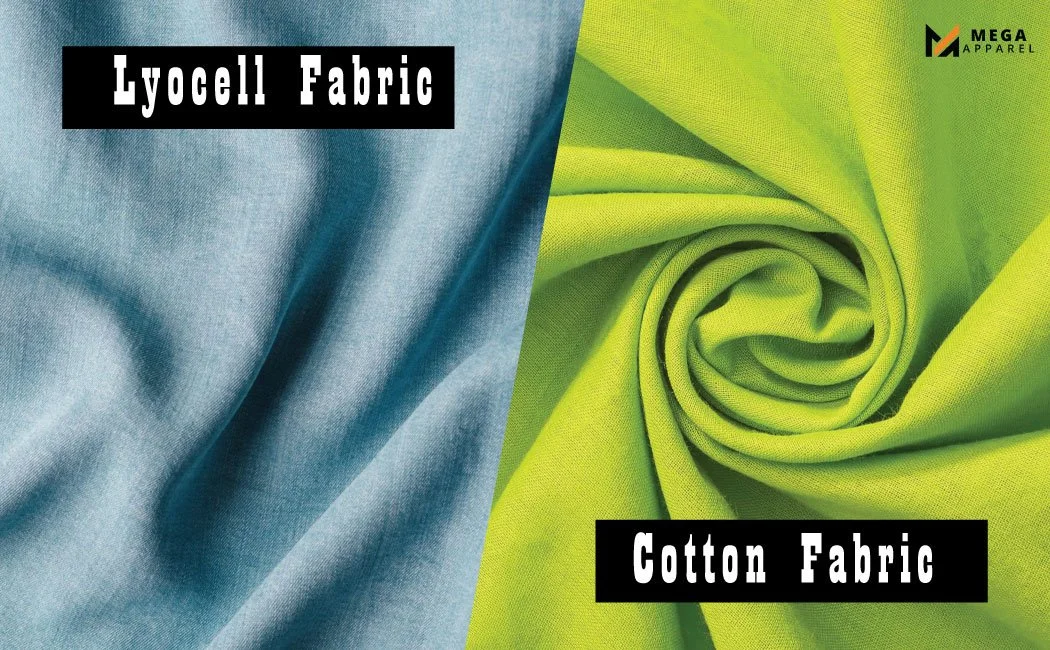
Appearance of Lyocell vs Cotton Fabric. (Collage made by Mega Apparel)
One of the most established areas of textile innovation is the development of bio-cellulosic fibers, including Lyocell and Modal. These materials are regenerated from cellulose and have become popular because they can combine the comfort consumers expect from natural-feeling fabrics with more resource-efficient production processes.
Lyocell is particularly known for its softness, smooth texture, breathability, and moisture-management properties. Certain Lyocell production systems also use a closed-loop process designed to recover and reuse the solvent involved in fiber production. For example, TENCEL™ states that more than 99.8% of the solvent used in its Lyocell process is recovered and fed back into production.
Modal offers similar advantages, including softness and comfort, while being produced through a resource-efficient modified viscose process with high chemical recovery rates.
These developments are important because they show sustainable textiles do not necessarily have to sacrifice performance or comfort. Consumers want clothing that feels good, performs well, and aligns with their environmental values. Bio-cellulosic fibers help demonstrate how these expectations can exist simultaneously.
However, the future of sustainable fabrics extends far beyond wood-based cellulose.
From Fruit Waste to Textile Innovation
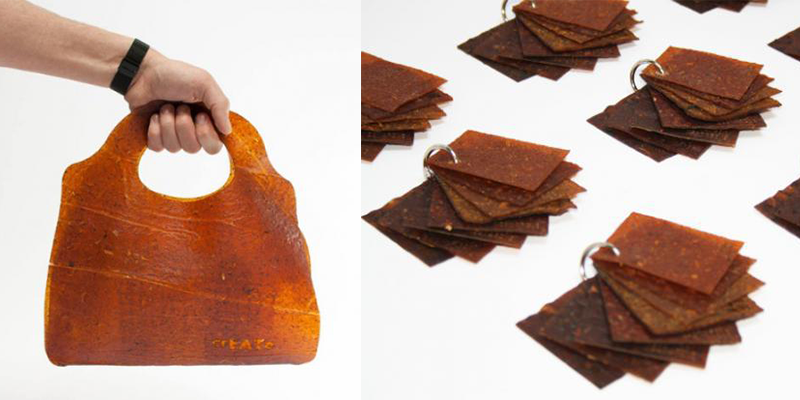
Fruit fabric bag. (Collage made by 4tify)
One of the most interesting developments in sustainable textile technology is the growing effort to turn agricultural waste into useful textile resources.
Researchers are investigating materials derived from mushrooms, yeast, agricultural byproducts, fruit peels, plant fibers, and other forms of biological waste.
Instead of viewing these materials as something that must simply be discarded, scientists are asking whether they can become the raw materials for new products.
This concept is part of a larger movement toward circular fashion, where waste from one process becomes an input for another.
Research from Bangladesh University of Textiles explored whether orange and pineapple peel extracts could replace conventional chemical reducing agents used in cotton discharge printing. Discharge printing uses chemicals to remove dye from selected areas of already-dyed fabric, creating patterns and designs.
The researchers found that compounds naturally present in fruit peels, including polyphenols, flavonoids, and ascorbic acid, can act as reducing agents. These compounds helped break down the chemical structures responsible for the color of reactive dyes.
On one carmine-colored cotton fabric, pineapple peel extract produced a 95.60% reduction in color strength, slightly exceeding the results achieved by some conventional reducing agents tested in the study. Orange peel extract achieved a 93.01% reduction on the same shade.
The research does not mean that fruit peels are ready to completely replace conventional textile chemicals across the industry. The researchers noted differences in performance depending on the dye and acknowledged that conventional agents generally produced brighter discharged areas. Natural extracts can also vary depending on factors such as the fruit source, maturity, and extraction process.
Still, the experiment represents an important direction for sustainable textile innovation: agricultural waste may have applications beyond simply becoming a biodegradable material. It could potentially help change the actual processes used to manufacture and decorate clothing.
Could Your Clothes Become “Smart”?
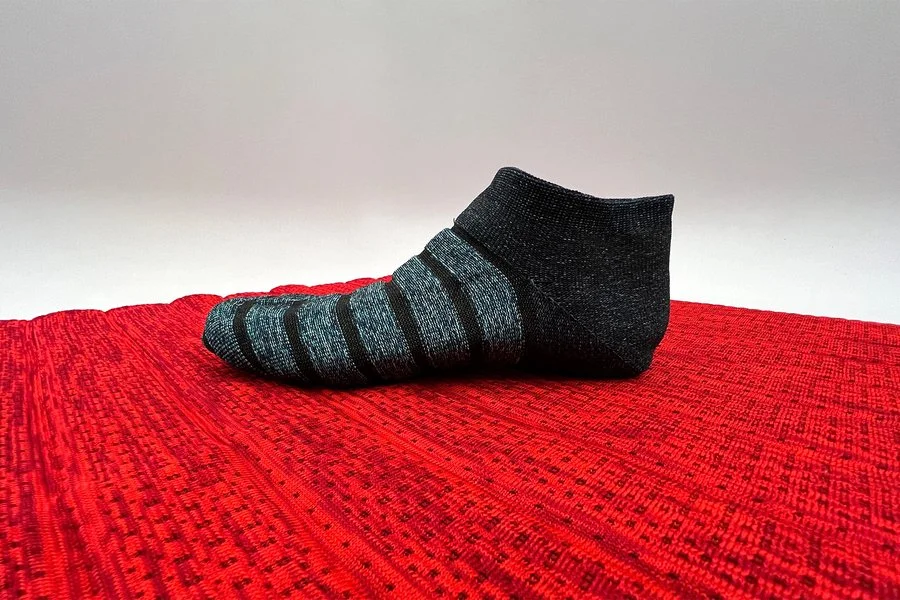
Smart textile sock. Photograph by Andrew Griffin (MIT News)
Sustainability is only one part of the future of textiles. Another major development is the emergence of smart textiles.
Smart textiles incorporate technologies such as sensors, conductive fibers, and temperature-regulating materials directly into fabrics. Instead of clothing being a passive product that simply covers the body, smart textiles can potentially interact with the wearer or respond to environmental conditions.
This could lead to clothing designed to monitor movement, body temperature, or other physical conditions. Conductive fibers can also allow textiles to interact with electronic systems without requiring traditional bulky components.
Temperature-regulating fabrics are another area of interest. Rather than creating one garment for a specific environment, manufacturers are exploring materials that can help regulate comfort as conditions change.
Imagine a jacket designed to respond differently to changes in temperature or a performance garment capable of monitoring aspects of physical activity. These concepts demonstrate how fashion technology could make clothing more responsive and multifunctional.
The challenge will be making these technologies comfortable, durable, washable, affordable, and aesthetically appealing enough for everyday consumers.
One Garment, Multiple Functions
Modern consumers increasingly expect their clothing to work across different environments and situations. A single garment might need to be breathable during physical activity, moisture-managing during warm weather, temperature-regulating in changing conditions, durable enough for repeated wear, and aesthetically appealing enough for everyday use.
This is changing the way textile manufacturers approach fabric development.
Instead of focusing on one characteristic at a time, researchers are attempting to combine multiple performance benefits into a single material. A future textile could potentially offer breathability, moisture management, temperature regulation, odor resistance, durability, and lower environmental impact at the same time.
Surface treatments are contributing to this development as well. Antimicrobial and odor-resistant treatments can help garments stay fresher for longer, while water-repellent treatments can provide protection from moisture. The goal is to make fabrics more technologically advanced and solve a variety of problems for consumers.
Digital Technology Is Changing the Appearance of Fabric
Textile innovation is also changing the way fabrics look.
Digital weaving systems and advanced loom technologies are allowing manufacturers to create raised textures, dimensional surfaces, and architectural structures that would have previously required more labor-intensive processes.
This creates an interesting combination of craftsmanship and technology. A fabric can have the visual complexity of a handmade textile while being produced with the consistency and scalability of modern manufacturing.
For designers, this opens up new creative possibilities. Instead of relying exclusively on traditional printing or embroidery techniques to create visual interest, designers can manipulate the actual structure of the fabric.
The result could be textiles with three-dimensional surfaces, unusual textures, sculptural qualities, or integrated patterns.
In other words, the future of textile design may not simply involve putting a design on fabric, it may involve designing the fabric itself.
Transparency Becomes Part of the Garment
As textile production becomes more complicated, consumers are also asking a simple question: Where did my clothing come from?
Digital product passports and traceability technologies could eventually provide consumers with information about a garment's materials, fiber origins, processing methods, chemicals, manufacturing locations, and transportation.
This could make transparency a much more visible part of the fashion shopping experience.
Instead of seeing only a label stating that a garment is made from a particular fiber, consumers could potentially scan a digital product passport and learn more about the garment's journey through the supply chain.
For brands, this could create both an opportunity and a challenge. Companies with transparent and responsible supply chains may be able to strengthen consumer trust, while brands with limited information about their materials and manufacturing processes may face greater pressure to improve visibility.
Traceability could therefore become more than a sustainability feature. It could become part of a brand's identity.
The Designer and Scientist Become Collaborators

Fashion designer and scientist shake hands. (Photo taken by Singapore Fashion Council)
Perhaps the biggest shift in textile innovation is not a specific material or technology. It is who is involved in creating the material in the first place.
Traditionally, designers might select fabrics from materials already available to them. Increasingly, fashion designers and textile engineers are collaborating from the beginning of the design process.
This means a designer could approach a textile engineer with a concept for a garment and ask: What does the material need to do for this design to work?
The answer could lead to an entirely new textile.
A garment might require a specific level of stretch, temperature regulation, structure, moisture management, texture, or biodegradability. Rather than choosing the closest existing fabric, designers and scientists can work together to develop a material specifically for the concept.
This collaboration is especially important as fashion becomes more technologically sophisticated. The future designer may need to understand not only color, silhouette, trend forecasting, and consumer behavior but also the basic possibilities of material science and textile technology.
What Does This Mean for the Future of Fashion?
The future of textiles is moving in several directions at once. Bio-cellulosic materials are creating alternatives that prioritize comfort and resource efficiency. Agricultural waste is becoming a potential source of new fibers, dyes, and textile chemicals. Smart fabrics are introducing technology directly into clothing. Digital weaving is expanding the visual possibilities of fabric, while traceability technologies are giving consumers greater insight into the products they purchase.
Most importantly, these developments demonstrate that sustainability and innovation do not have to exist separately.
The orange and pineapple peel research offers a particularly interesting example. Instead of simply asking how to dispose of agricultural waste, researchers asked whether the waste could solve another problem within textile production. The result was a potential alternative to some conventional chemical reducing agents used in discharge printing.
The future textile industry will likely be less focused on producing more materials simply for the sake of producing more. Instead, innovation will increasingly focus on what materials are made from, how they are produced, what they can do, how long they last, and what happens to them afterward.
Fashion has always been about creating something new. Now, textile innovation is redefining what “new” can mean. It may mean a shirt made from regenerated cellulose, a fabric developed from agricultural waste, a jacket that responds to its environment, or a garment whose entire supply chain can be traced through a digital passport.
The next fashion revolution may not begin on the runway. It may begin in the textile laboratory.
Works Cited
Aniela Hoitink creates dress from mushroom mycelium (2016, April 1). dezeen.com https://www.dezeen.com/2016/04/01/aniela-hoitink-neffa-dress-mushroom-mycelium-textile-materials-fashion/
Fashion is more than just creativity. (2026, August 16). https://www.instagram.com/sgfashioncouncil/ https://www.instagram.com/p/DcN0NyNDKV4/?img_index=3
Fashion Trends Influencing Fabric Innovation in 2026 globeltextiletimes.com https://www.globaltextiletimes.com/technology/fashion-trends-influencing-fabric-innovation-in-2026/
From Fruit to Fabrics (Part 2). (October 6). 4tify.co https://www.4tify.co/blog/from-fruit-to-fabrics-part-2
Fruit Peel Extracts Replace Toxic Chemicals in Cotton Discharge Printing. (2026, October 7). bioengineer.org https://bioengineer.org/fruit-peel-extracts-replace-toxic-chemicals-in-cotton-discharge-printing/
Smart textiles sense how their users are moving. (2022, July 7). news.mit.edu https://news.mit.edu/2022/smart-textiles-sense-movement-0707
What Is Lyocell Fabric? An Ultimate Guide to its Features and Uses. (2026, September 7). megapparel.com https://megaapparel.com/blog/what-is-lyocell-fabric/
What is Lyocell Fabric: Properties, How its Made and Where. (2026, October 8). sewport.com